Cricket Bat Care
NEW BAT PREPERATION
Cricket bats are made from natural wood and require proper preparation/seasoning before use. The Willow Saver strongly recommends seasoning your bat, which includes applying linseed oil and knocking in, either by hand with a wooden mallet or using a machine. However, excessive machine knocking is not advised.
After the initial knocking-in process, players should continue gradually conditioning the bat by practicing with an old ball. Please note that knocking in alone, whether done by hand or machine, does not fully prepare the bat for immediate use with a new hard ball.
Bat Warranty Process
Cricket bats are made from natural wood and are designed to hit a hard ball. Small cracks and dents are normal and do not affect performance. Minor cracks can usually be sanded out and have always been a common part of using a cricket bat. This is a natural process. Cracks do not mean the bat is faulty. They are often a sign that the bat needs more knocking in.
Customers must contact the manufacturer directly for any warranty claims on broken cricket bats. The manufacturer will inspect the bat and decide if it can be repaired or replaced. Retailers cannot make this decision. Each manufacturer has its own warranty policy. Due to the nature of the sport, all claims go through a strict assessment process.
To submit a claim, the bat must be sent to the manufacturer. Customers are responsible for all shipping costs and any customs charges.
Warranty Coverage Guidelines:
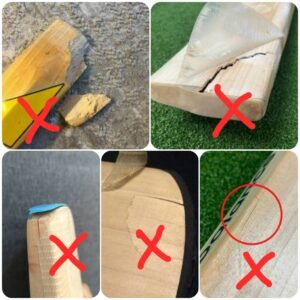
Not Covered:
- Yorker damage to the toe
- Minor edge cracks
- Damage from poor or no knocking-in, incorrect machine use, or misuse
- Tampering (e.g., weight or shape changes)
- Damage from moisture (wet conditions) or heat (car boot or direct sunlight)
- Use of low-quality hard balls or bowling machine balls
- Hitting objects other than cricket balls (e.g., stumps, stones)
Covered:
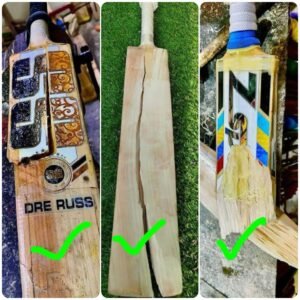
- Bats that break from the splice or middle of the blade
- Storm damage (bat breaks into two due to strong wind)
- Major cracks near the handle
BAT HANDLES:
Bat handles are made from a number of cane pieces put together. A crack in one of the canes may result in a sound. Cracked or broken handles require a handle replacement, but this doesn’t mean the entire bat needs replacing. The manufacturer will only replace the handle and clean up the bat for customers.
Cricket Bat Care
NEW BAT PREPERATION
Cricket bats are made from natural wood and require proper preparation/seasoning before use. The Willow Saver strongly recommends seasoning your bat, which includes applying linseed oil and knocking in, either by hand with a wooden mallet or using a machine. However, excessive machine knocking is not advised.
After the initial knocking-in process, players should continue gradually conditioning the bat by practicing with an old ball. Please note that knocking in alone, whether done by hand or machine, does not fully prepare the bat for immediate use with a new hard ball.
Bat Warranty Process
Cricket bats are made from natural wood and are designed to hit a hard ball. Small cracks and dents are normal and do not affect performance. Minor cracks can usually be sanded out and have always been a common part of using a cricket bat. This is a natural process. Cracks do not mean the bat is faulty. They are often a sign that the bat needs more knocking in.
Customers must contact the manufacturer directly for any warranty claims on broken cricket bats. The manufacturer will inspect the bat and decide if it can be repaired or replaced. Retailers cannot make this decision. Each manufacturer has its own warranty policy. Due to the nature of the sport, all claims go through a strict assessment process.
To submit a claim, the bat must be sent to the manufacturer. Customers are responsible for all shipping costs and any customs charges.
Warranty Coverage Guidelines:
Covered:
- Bats that break from the splice or middle of the blade
- Storm damage (bat breaks into two due to strong wind)
- Major cracks near the handle
Not Covered:
- Yorker damage to the toe
- Minor edge cracks
- Damage from poor or no knocking-in, incorrect machine use, or misuse
- Tampering (e.g., weight or shape changes)
- Damage from moisture (wet conditions) or heat (car boot or direct sunlight)
- Use of low-quality hard balls or bowling machine balls
- Hitting objects other than cricket balls (e.g., stumps, stones)
BAT HANDLES:
Bat handles are made from a number of cane pieces put together. A crack in one of the canes may result in a sound. Cracked or broken handles require a handle replacement, but this doesn’t mean the entire bat needs replacing. The manufacturer will only replace the handle and clean up the bat for customers.